KISS is an acronym for Keep It Simple Stupid and that's the message the 2017 IPM Symposium delivered this year. Instead of promises of new weed/ insect controls coming soon to a big box store near you, this year's event was scaled down and back to basics. In fact, the message related was the same one we've been preaching to our customer base for years now - there is no silver bullet in this post-pesticide era.
Maintaining your lawn, be it golf green, sports turf, or home lawn involves the combination of five key factors working in unison. They are:
Solid cultural practices like proper mowing and watering techniques with annual core aeration.
Over-seeding annually with favourable grass types like endophytic ryes and fescues.
Regular feeding of fertilizer with micro nutrients to create a healthy soil base,
Use of nematodes and beneficials to control unwanted insects annually.
and finally Weed management with the use of legal pesticides, which in this case is Fiesta.
The reason weed control is the last thing on the list is simple, no matter what, the weeds will come and without a systemic killer on the market you are powerless to effectively control the problem long term. Therefore the shift is to maintaining your lawn in all the above areas, and in doing so, everything will become more manageable and the aesthetics more pleasing.
The more you practice the above the less weeds and overall problems you will have with your turf. It has been almost eight years since the bylaw has come in to effect and if you haven't adjusted your expectations of what today's lawn should look like it is time to finally re-evaluate. All lawns will have one type of weed or another - it's inevitable.
Future posts will cover some of the key elements involved such as Soil health, over seeding and a new strain of nematode coming on the market. However, keep in mind, as far as new products go, I've been told that cheque is in the mail before.
For now, we must remember the no silver bullet philosophy and diligence, vigilance and patience is key.
Wednesday, January 18, 2017

Saturday, November 5, 2016
Spring forward, fall cut-backs

If you haven't done so, your lawn needs to be cut back to about an inch or, an inch and a half. You also need to clear it if all debris, leaves, twigs, etc. All this will prevent issues when the snow melts and spring returns. It is also a good time to add a little extra, high-quality grass seed to you turf to help it come the new year.
Leaving grass long will enhance the probability it will be matted with excess thatch once the turf is visible once more. Cutting the grass back will also prevent snow mould and damage from critters like voles who love to tunnel their way under the snow while leaving tracks in your lawn.
This winter is expected to be quite severe and the opposite of last year's mild conditions.
So, do your self a favour and your grass as well. When the days become shorter, so should the length of your lawn. Otherwise, come spring you may be in for a rude awakening.
Thursday, October 20, 2016
Hallowhine
As Halloween approaches and the carcass of one of the worst lawn seasons comes to a close, I thought I would vent a little on some issues that still irk me.

Buried alive in a shallow grave- This year we were very lucky when we aerated. We didn't hit one shallow sprinkler line or media cable. However, it doesn't change the fact that these are real issues due to some shoddy workmanship. You'd think that Bell and Rogers would bury their lines at least 6 inches down to avoid any mishap but it never seems to be the case. Although I have noticed more signage to call before you dig around their boxes, the practice remains and the shallow lines continue.
Bee horror movie- for the farmers anyway, who have been unfairly targeted for their use of imidacloprid and carbaryl which is said to be killing the bee population. Back before the bylaw when we all used products like Merit and Sevin no one breathed a word about a dying bee population, but here we are years later and suddenly it's an issue. The finger pointing has been going on for some time at our local growers. Haters gonna hate...I guess, but when you tamper with those who supply food you may not like the end result.
The invisible man- Ok, hottest season on record, driest in 75 years. Needless to say lawns suffered a great deal. I know some of ours were awful and from the looks of it no lawn care company came away unscathed. One new twist I noticed this year was, some distressed lawns I saw work being done on, were either not flagged, or the sign was placed backward and in an unobtrusive place as to not call attention to the company involved. I can understand the second option. I mean, who would want the general public to know you are a contributor to the condition of the turf, but not putting notice on a lawn at all after it's treated is a violation of the law.
I know what you did last summer- It has been 7 years and counting since the pesticide bylaw came into effect. One thing remains a constant in this post-pesticide era we find ourselves in, the fantastic job our government has done convincing the populace about the evils of lawn care.
Although I spray organic controls now and make some manufacturers richer by the second, ( Neudorf stock anyone?), I am still confronted seasonally by the douche-rods holding their hand over their faces while I'm performing an application, funny when Fiesta has no smell, or tersely confronting me about the products I use.
Yet, these same people think nothing about filling their vehicles with gas, (fumes are a known carcinogen), or eating their fruits and veggies treated with the chemicals they accuse me of using. Can you say hypocrite?
It is the same planted seed that has people convinced pedophiles lurk around every corner, deadly allergies and viruses plague us at every turn, and the zombie apocalypse is days away.
It's the power of the most influential tool....fear.
The fear has more and more homeowners replacing real grass with artificial turf...
Howling at the silver bullet-
...But fear runs both ways and as one domino falls another is put in motion. Check out this report on the health hazard of artificial turf.
The Chinch bugs that ate 2016- These lawn vampires seem to get worse every year and while we wait for more substantial treatments to appear on the market, the truth is, we can only apply products that will deter this insect, not kill it. Nematodes bred for Chinch do not work and don't be duped into thinking they do. Education, communication and teamwork is what is needed when it comes to dealing with any lawn infestation. This is an insect that loves it hot and dry and 2016 was the perfect storm. Which brings me to my last rant.
Soylent green- The number of people who just gave up on watering and cutting their lawn properly this year was staggering. No candy for you! In some severe cases it ended with a total re-sodding of the lawn, or at least extensive seeding in damaged areas to get the grass to recover. Now sure, this was a hot and dry one and not expected annually, *fingers crossed , but the cost effectiveness of mowing at 3 inches high and watering deeply once a week pales in comparison when you add hindsight and replacing an entire lawn. The last thing I want to do is turn my sign backwards on a lawn that could have easily been saved by a few simple weekly practices.
Have a safe and happy Halloween.
Sunday, September 25, 2016
Some of these lawns are not like the others
 No denying, this has been a tough year for lawns. In fact, one of the worst I've seen and the importance of maintaining your grass with proper mowing and watering has never been greater, (like the lawn pictured above).
Yet, many homeowners just raised their hands in surrender and stopped proper practices, sighting financial reasons, hopelessness or just plain laziness as the reason.
You need to understand, there is no magic pill for your lawn care provider to correct the lawn issues over night, if you do not hold up your end of the bargain. We came to realize this season the weather was not going to be our ally back in May.
Then again, back in May you were probably cursing because your grass was growing too fast. So you let it go a couple of weeks and then scalped it putting-green short. As the first heat wave hit, your green lawn went brown in a matter of three days beat by the relentless sun. Without any natural precipitation the insects moved in and chinch bug, sod web-worm and army cut worm weakened your lawn further to allow the opportunistic weeds to take over creating one hell of a mess. Sound familiar?
I've seen lawns on the same route, done the same day, with the same products, go from those that are green and plush, (watered and cut properly), to brown, weedy and insect infested. Sometimes this is on the very same street.
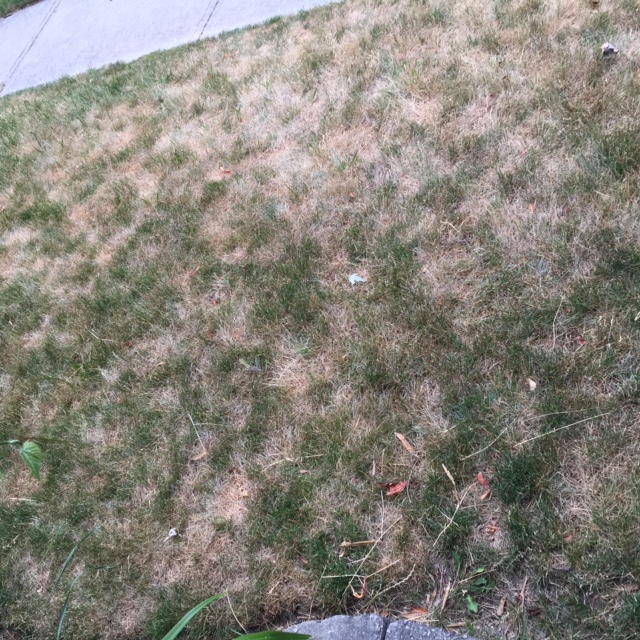
Yes, grass is resilient and will recover over time with a little help, but in the meantime it is very frustrating to have to attach my company name to an unsightly lawn when I know everything was done correctly on my end.
Maybe the day is coming where in-ground sprinklers and proof of proper cutting techniques are prerequisites before we show up to treat the lawn. At least then we'll know we are in a partnership with a homeowner who cares about their lawn the way we do.
Monday, September 5, 2016
No "I" in team
 A pitcher in the major leagues has a responsibility to his team...to get as many outs as he can. Yet, without a strong bullpen and run support from his teammates, he is not going to win any games.
Now try to think of your lawn-care provider as that pitcher, Mother Nature is out in the bullpen and the homeowner is the run support.
Let's take a look at Mother Nature's stats this year shall we...second hottest summer on record, driest season in 75 years, 50+ days with humidity over 30 Celsius with several pushing 40 degrees, (awesome for sun worshipers, not so much for lawn care). She's been tossing everything at us from crabgrass, to chinch bug, to sod web-worm and hasn't allowed us to go deep into the game since May. We've had little in our arsenal to answer the onslaught.
We just have to trust in our pitching mechanics and hope we have enough run support to win the close contests going down the stretch.
Some, like the lawn pictured above, are the Josh Donaldson's of our team, with a sprinkler system and cutting the lawn at 3 inches high the grass has not suffered much. With them in our dugout there was little to no damage from the invasion of weeds and insects this year.
Yet, along with the Bautista's, Tulowitzki's, Martin's and Encarnacion's in the field there were those, lower in the batting-order, who refused to water and still felt scalping their lawn while catching knuckle balls day-in-day-out was a sure-fire road to post-season success, (my apologies to Josh Thole).
Now those same homeowners have found, as September rolls around, they are too many games behind their neighbors to make a run at the Pennant.
I'm sure most lawn care providers strive to be the ace of the pitching staff (although some appear to be here to collect the big contract). However, with the team we've had this year it doesn't matter how well we pitched, we might end up being just another hack who can't win games.
Go Jays Go!
Friday, July 15, 2016
You poor sod

It really is hard to believe that someone would lay sod at this time of the year, but it does happen. Judging by the dead and dying newly sodded lawns I've seen over the past few weeks, it happens a lot.
The same principal applies to seeding and that is why we don't recommend it once the summer heat hits. It is simply too tough a sale to ask grass to germinate in these drought conditions.
Now it's not that I am anti-sod, but there are things you should be aware of before you decide to replace your existing lawn.
Cost is #1. To replace an average size lawn of...let's say 3000 square feet you can easily pay 3 grand.
Take into consideration that 90% of sod is Kentucky Blue grass and you compound the issue further. Not exactly the deepest root system and unless you are pounding the lawn with biblical proportions of water your turf will suffer.
Also there are insects to consider, although endophytes are being introduced to Blue Grass there hasn't been as much success as in strains of fescues and rye gasses, so you are still ringing the dinner bell for grubs, chinch, sod webworm, army cutworm...etc.
Also understand: the sod that looks so wonderful in front of your new home has been treated with chemicals. No....not the organics we in the lawn care industry use...I'm talking the goooood stuff that all exempt businesses like sod growers use to maintain their product so they can deliver a pristine rolls of green to you, the consumer weed-free...at least until it's laid in temperatures like this and dies anyway.
So ask yourself, "who is the poor sod" --- the dying grass, or you, for shelling out three plus G's on new turf?
It sure isn't the grower, merchant, or landscaper.
Sunday, June 26, 2016
Battle of the three armies
The ugly yellow flower you are seeing on most city boulevards and the odd lawn is Birdsfoot Trefoil. The significance of this weed? It is Mother Nature's calling card to let us know the siege of crabgrass and Chinch Bug are on the way leaving you to hold the fort against the coming onslaught.
After another weekend of high temperatures, crabgrass will probably explode seemingly overnight and the heat stress your lawn is already under may soon be disguising a hungry army of chinch bugs as they march onto your grass from gardens and from the thatch layer of your turf. Although given the heat stress most lawns are currently under Ican imagine there will be much to munch on.
Although chemically there is no solution for either of these invaders there is still hope for small victories.
As far as Crabgrass is concerned- Corn meal as a post emergent? Well, it's dirt cheep so what-the-hell, might as well give it a spin with crabgrass running rampant in the heat of summer. I've tried this on a few patches and it is working...very slowly...but working. I believe a healthier dose of the powder would expedite the process, but for me to cover a lawn with corn meal...let's say I'm not too eager.
You could also pull the weed out. It doesn't have a deep root system and will come out of wet soil easily, ( if we ever get rain), but it spreads quickly so you must keep on top of it.
If you simply want to admit defeat, this is an annual weed and it will die-off come fall. Just make sure you keep it cropped so it doesn't go to seed and compound the problem next year,
As for the Hairy Chinch Bug, they do most of their damage in midsummer during periods of hot, dry weather. With their piercing mouths they suck juices from the crown and stems of grass, causing small sections of grass to appear sunken, yellow and finally brown. As damage progresses the small spots can run together to become large dead patches that is usually mistaken for drought stress.
The life cycle of Chinch Bugs is quite different than that of White Grubs. The adults spend their winter in shrubbery, under trees and in flower beds. In spring the adult becomes active and deposits eggs into the lawn. The eggs quickly become tiny nymphs by early June and become adults by mid July. Damage begins and becomes evident usually in July.

Small infestations of Chinch Bugs won’t cause noticeable damage, but after several weeks of hot, dry weather, the attack can be quite severe.
The easiest way to detect the presence of Chinch Bugs is to make a cylinder out of a large tin can. Coffee containers or 48 oz tomato juice containers will do the trick just fine. Sink the can partway into the soil and fill with water. Within minutes tiny bugs will emerge and float to the top. Those of us who are over 50 may need glasses, because the Chinch Bugs are only 4 mm long.
The best time to do a Chinch Bug test is in July when the bugs are most abundant. The best place to do the test is at the edge of a suspected affected area usually near a heat source like pavement, or a sunny area of the lawn.
Chinch bugs are now difficult to control. Since Ontario’s Cosmetic Pesticide Act came into place, Diazinon, Chlorpyrifos and Sevin are no longer available.
Know that Chinch Bugs dislike water. Mixing a little dish detergent like Sunlight or Palmolive into the mix will improve results. You can also try a shop-vac on the infected area to remove this insect.
Yet a healthy lawn is still the best defense- annual aeration (fall), over-seeding with endophytic grass seed (stay away from Kentucky Blue grass). Proper watering and cutting is also essential. Following these guidelines wont eliminate the enemy altogether but it will go along way to limiting the damage to your lawns infrastructure.
What ever your weapon, make no mistake the battle is about to begin between you, Chinch and crabgrass.
Subscribe to:
Posts (Atom)

