Sunday, September 25, 2016

Some of these lawns are not like the others

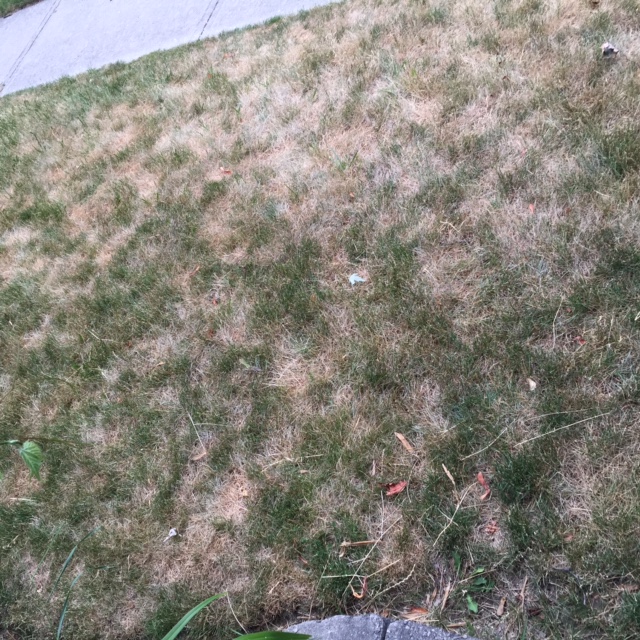
No denying, this has been a tough year for lawns. In fact, one of the worst I've seen and the importance of maintaining your grass with proper mowing and watering has never been greater, (like the lawn pictured above).

Yet, many homeowners just raised their hands in surrender and stopped proper practices, sighting financial reasons, hopelessness or just plain laziness as the reason.

You need to understand, there is no magic pill for your lawn care provider to correct the lawn issues over night, if you do not hold up your end of the bargain. We came to realize this season the weather was not going to be our ally back in May.

Then again, back in May you were probably cursing because your grass was growing too fast. So you let it go a couple of weeks and then scalped it putting-green short. As the first heat wave hit, your green lawn went brown in a matter of three days beat by the relentless sun. Without any natural precipitation the insects moved in and chinch bug, sod web-worm and army cut worm weakened your lawn further to allow the opportunistic weeds to take over creating one hell of a mess. Sound familiar?

I've seen lawns on the same route, done the same day, with the same products, go from those that are green and plush, (watered and cut properly), to brown, weedy and insect infested. Sometimes this is on the very same street.
Yes, grass is resilient and will recover over time with a little help, but in the meantime it is very frustrating to have to attach my company name to an unsightly lawn when I know everything was done correctly on my end.

Maybe the day is coming where in-ground sprinklers and proof of proper cutting techniques are prerequisites before we show up to treat the lawn. At least then we'll know we are in a partnership with a homeowner who cares about their lawn the way we do.

Monday, September 5, 2016

No "I" in team

A pitcher in the major leagues has a responsibility to his team...to get as many outs as he can. Yet, without a strong bullpen and run support from his teammates, he is not going to win any games.

Now try to think of your lawn-care provider as that pitcher, Mother Nature is out in the bullpen and the homeowner is the run support.

Let's take a look at Mother Nature's stats this year shall we...second hottest summer on record, driest season in 75 years, 50+ days with humidity over 30 Celsius with several pushing 40 degrees, (awesome for sun worshipers, not so much for lawn care). She's been tossing everything at us from crabgrass, to chinch bug, to sod web-worm and hasn't allowed us to go deep into the game since May. We've had little in our arsenal to answer the onslaught.

We just have to trust in our pitching mechanics and hope we have enough run support to win the close contests going down the stretch.

Some, like the lawn pictured above, are the Josh Donaldson's of our team, with a sprinkler system and cutting the lawn at 3 inches high the grass has not suffered much. With them in our dugout there was little to no damage from the invasion of weeds and insects this year.

Yet, along with the Bautista's, Tulowitzki's, Martin's and Encarnacion's in the field there were those, lower in the batting-order, who refused to water and still felt scalping their lawn while catching knuckle balls day-in-day-out was a sure-fire road to post-season success, (my apologies to Josh Thole).

Now those same homeowners have found, as September rolls around, they are too many games behind their neighbors to make a run at the Pennant.

I'm sure most lawn care providers strive to be the ace of the pitching staff (although some appear to be here to collect the big contract). However, with the team we've had this year it doesn't matter how well we pitched, we might end up being just another hack who can't win games.

Go Jays Go!


Friday, July 15, 2016

You poor sod


     It really is hard to believe that someone would lay sod at this time of the year, but it does happen. Judging by the dead and dying newly sodded lawns I've seen over the past few weeks, it happens a lot.

The same principal applies to seeding and that is why we don't recommend it once the summer heat hits. It is simply too tough a sale to ask grass to germinate in these drought conditions.

Now it's not that I am anti-sod, but there are things you should be aware of before you decide to replace your existing lawn.

Cost is #1. To replace an average size lawn of...let's say 3000 square feet you can easily pay 3 grand.

Take into consideration that 90% of sod is Kentucky Blue grass and you compound the issue further. Not exactly the deepest root system and unless you are pounding the lawn with biblical proportions of water your turf will suffer.

Also there are insects to consider, although endophytes are being introduced to Blue Grass there hasn't been as much success as in strains of fescues and rye gasses, so you are still ringing the dinner bell for grubs, chinch, sod webworm, army cutworm...etc.

Also understand: the sod that looks so wonderful in front of your new home has been treated with chemicals. No....not the organics we in the lawn care industry use...I'm talking the goooood stuff that all exempt businesses like sod growers use to maintain their product so they can deliver a pristine rolls of green to you, the consumer weed-free...at least until it's laid in temperatures like this and dies anyway.

So ask yourself, "who is the poor sod" --- the dying grass, or you, for shelling out three plus G's on new turf?

 It sure isn't the grower, merchant, or landscaper.


Sunday, June 26, 2016

Battle of the three armies

The ugly yellow flower you are seeing on most city boulevards and the odd lawn is Birdsfoot Trefoil. The significance of this weed? It is Mother Nature's calling card to let us know the siege of crabgrass and Chinch Bug are on the way leaving you to hold the fort against the coming onslaught.

After another weekend of high temperatures, crabgrass will probably explode seemingly overnight and the heat stress your lawn is already under may soon be disguising a hungry army of chinch bugs as they march onto your grass from gardens and from the thatch layer of your turf. Although given the heat stress most lawns are currently under Ican imagine there will be much to munch on.

Although chemically there is no solution for either of these invaders there is still hope for small victories.

As far as Crabgrass is concerned- Corn meal as a post emergent? Well, it's dirt cheep so what-the-hell, might as well give it a spin with crabgrass running rampant in the heat of summer. I've tried this on a few patches and it is working...very slowly...but working. I believe a healthier dose of the powder would expedite the process, but for me to cover a lawn with corn meal...let's say I'm not too eager.

You could also pull the weed out. It doesn't have a deep root system and will come out of wet soil easily, ( if we ever get rain), but it spreads quickly so you must keep on top of it.

If you simply want to admit defeat, this is an annual weed and it will die-off come fall. Just make sure you keep it cropped so it doesn't go to seed and compound the problem next year,

As for the Hairy Chinch Bug, they do most of their damage in midsummer during periods of hot, dry weather.  With their piercing mouths they suck juices from the crown and stems of grass, causing small sections of grass to appear sunken, yellow and finally brown.  As damage progresses the small spots can run together to become large dead patches that is usually mistaken for drought stress.

The life cycle of Chinch Bugs is quite different than that of White Grubs.  The adults spend their winter in shrubbery, under trees and in flower beds.  In spring the adult becomes active and deposits eggs into the lawn.  The eggs quickly become tiny nymphs by early June and become adults by mid July.  Damage begins and becomes evident usually in July.

                  Small infestations of Chinch Bugs won’t cause noticeable damage, but after several weeks of hot, dry weather, the attack can be quite severe.

                The easiest way to detect the presence of Chinch Bugs is to make a cylinder out of a large tin can.  Coffee containers or 48 oz tomato juice containers will do the trick just fine.  Sink the can partway into the soil and fill with water.  Within minutes tiny bugs will emerge and float to the top.  Those of us who are over 50 may need glasses, because the Chinch Bugs are only 4 mm long.

                  The best time to do a Chinch Bug test is in July  when the bugs are most abundant.  The best place to do the test is at the edge of a suspected affected area usually near a heat source like pavement, or a sunny area of the lawn.

                Chinch bugs are now difficult to control.  Since Ontario’s Cosmetic Pesticide Act came into place, Diazinon, Chlorpyrifos and Sevin are no longer available.

Know that Chinch Bugs dislike water. Mixing a little dish detergent like Sunlight or Palmolive into the mix will improve results. You can also try a shop-vac on the infected area to remove this insect.

Yet a healthy lawn is still the best defense- annual aeration (fall),  over-seeding with endophytic grass seed (stay away from Kentucky Blue grass). Proper watering and cutting is also essential. Following these guidelines wont eliminate the enemy altogether but it will go along way to limiting the damage to your lawns infrastructure.

What ever your weapon, make no mistake the battle is about to begin between you, Chinch and crabgrass.

Sunday, June 5, 2016

Summer comes early

It didn't take long. One weekend of higher temperatures and increased humidity mixed with an overall lack of precipitation. The result? Heat stress, brown patch and summer patch.


It's the type of conditions we usually see on lawns late July, or early August. Yet here it was not even June and it seemed almost every lawn was suffering from one or the other.

This is precisely why we preach the importance of proper cutting, (3" high), and watering, (1 to 2 inches per week), when temperatures go north of 30 Celsius.

In the case of turf diseases like brown and summer patch, pounding your grass with water is only going to add to the problem. Make sure watering is less frequent, mowing blades are sharp and the thatch layer has been aerated. It is also important to stay away from quick-release fertilizers. Remember in Ontario fungicides are not an option and would be a very expensive remedy if they were.

Slow and steady wins the race here. Over time a resilient lawn will correct itself with proper  techniques and return to the green you expect without damaging your wallet.

Saturday, April 16, 2016

Gluten for punishment

I have to ask...is anyone out there still using corn gluten as a product to control weeds, or  as a crabgrass pre-emergent?

If the answer to this question is "yes", then in my opinion, you are wasting your time and money.

If you want to use it as a fertilizer then be my guest. However, as a control?....forget it.

Lets explore this product further: at 20 lbs per 1,000 square feet, with an average lawn size of 2,500, you have to put down approximately 1 bag  @ $35.00 (my cost).
You, as a homeowner, can expect to pay, after you factor in truck, technician, product etc. about twice that plus HST for a small to average sized lawn.

All this from an organic that gives you about 6 weeks of protection and then in mid June when corn gluten has lost the effectiveness you get crabgrass and weeds anyway. It gets even worse if you aerate after the application. Aerating post CG punches holes in the protective barrier you just applied and expedites the process.

You are better off raising your mower height to 3 inches to keep the soil temperature cooler and the lawn shaded instead of using this product. You'll have a better chance of stifling germination and it won't cost you nearly as much.

Once, I too, because there were no alternatives, blew my brains out on corn gluten, in both granular and liquid, only to realize what a cash dump it really was. Needless to say, I have not used it since. Now I concentrate more on overall lawn health and working in conjunction with the homeowner to keep pesky crabgrass from overtaking your lawn.

Corn is already in everything else from fuel to most of the groceries you buy, you can at least have the last say and keep it off your lawn.


Sunday, March 20, 2016

Grubmageddon

Welcome to Spring, but before we get too giddy let us address, what potentially, could be a nasty year for insects. The two most prevalent culprits causing damage to lawns in southwestern Ontario are Hairy Chinch Bugs and White Grubs.  We could be in for a rough ride from both this year.

Chinch have been invasive over the last few years and 2016 promises no different, but we will deal with that issue when we get into June. For now, my main concern  is grubs and that will be the focus here.
Grubs have been relatively quiet the past three years which means the cycle is coming to an end and a period of three years of increasing numbers is evident.
There are a few factors to consider; the first being the mild winter we experienced. Grubs over-winter and when temperatures are more on the mild side grub populations easily remain intact.
There were signs of excessive digging activity in areas north of the G.T.A. last fall suggesting greater numbers and since this is a migratory insect, look for invasions to lawns further south this year. Also, let me not forget my suppliers who all touted white grub on the increase as the 2015 season came to a close.

                At first glance, symptoms of White Grubs and Chinch Bugs are similar.  Both cause irregularly shaped yellow to brown patches in the lawn.  But if we examine the issue carefully, it is quite easy to detect the difference between the two.

                White Grubs do most of their damage in early spring and in fall.  The adults, Japanese Beetles, resemble June bugs but are smaller, more slender and have shiny copper coloured wings.  The adults don’t damage grass, but feed voraciously on many plants, trees, perennials.  They do most of their eating in July and August.
                  Beginning in late July to mid August, adult Japanese Beetles lay eggs which hatch in a few weeks.  The eggs become tiny White Grubs with quite an appetite.  They eat grass roots causing irregularly shaped dead patches.  Damage is minimal when the grubs are tiny, but as they mature later in the fall, damage can be quite extensive.
I'm not saying all this to sell grub and insect packages it is simply the truth we live with in the here and now. Organic means are not as effective as traditional methods and there is always going to be fallout.

                 When weather becomes cool, White Grubs go deep into the soil.  In spring the grubs emerge and begin feeding again.  When the grubs are fully grown they transforms into adults and the process repeats itself.

                To control White Grubs and the subsequent Japanese Beetles, apply nematodes which are tiny naturally found organisms that feed on the grubs.  Ideally, nemetodes should be applied beginning late summer to early fall, when the grubs are small.   Add at least 3 inches of water  to the lawn before and after application so the nemetodes have the ability to travel through the soil.

If you are looking for an alternative to nematodes in Ontario, there isn't any. Such is the reality of our surroundings with limited controls and treatments at our disposal.

                 The best defense against all insects is a healthy lawn.  Start with good soil. Fertilize faithfully to keep the grass growing.  Water during dry spells.  Mow regularly and punctually, and don’t cut the grass too short.

                  As lawn care becomes more challenging, rejuvenating the lawn makes more sense.  If your lawn is weak, dying or dead, apply a layer of top dressing topsoil and sow a good quality grass seed.  The best time to apply grass seed is late summer and fall.
Don't play Russian Roulette when it comes to your grass, especially during a grub apocalypse.
You may dodge the bullet in the chamber for this season, but sooner or later luck runs out and your lawn will suffer.